
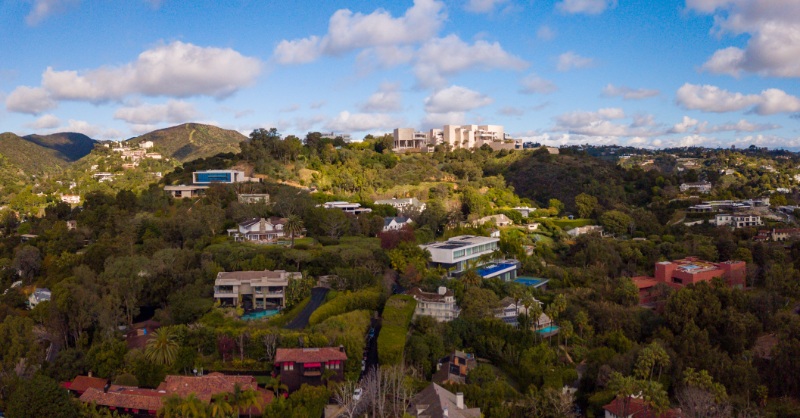
For Westside buyers narrowing their search, the choice between Brentwood and Pacific Palisades is one of the most consequential decisions they will make. The two communities sit side by side, share many of the same buyer demographics, and feed into the same independent school networks. But they are, in lived experience, quite different places — and the differences have only widened since the January 2025 Palisades fires reshaped the housing inventory and demand patterns of both neighborhoods.
This guide is written for buyers who are seriously considering both options. It is not an argument for one over the other. Either community can be the right answer depending on what matters most to a family, an investor, or an individual buyer. What follows is the honest comparison — what each place actually offers, where the pricing sits in 2026, how the schools work in practice, and what the post-fire dynamics mean for the next several years.
The Quick Snapshot
As of early 2026, the median single-family home price in Brentwood is approximately $3.6 million, with the luxury segment — homes north of $5 million — typically trading between $5 million and $30 million, and the very top end (Brentwood Park, Sullivan Canyon, Mandeville Canyon's premier streets) crossing $40 million for the rare estate property.
Pacific Palisades' median single-family home price in 2026 sits around $3.5 million for standing homes, with the headline number reflecting a market that is in active transition. Pre-fire luxury pricing in the Palisades typically ran $4 million to $25 million for finished homes in the central neighborhoods, with Riviera and Huntington Palisades estates regularly trading above $20 million. Post-fire, the Palisades market now includes a unique inventory of approximately 300-plus vacant lots, with average lot pricing around $2.1 million and Riviera lots commanding significantly more.
The simplest way to read the comparison: Brentwood is the more stable, finished market. Pacific Palisades is the more dynamic, opportunity-laden market — but one that requires patience and a longer time horizon.
Vibe and Daily Life
Brentwood feels established. The streets are wide and tree-lined, the commercial districts (Brentwood Country Mart, the San Vicente corridor, the Brentwood Village) are walkable but discrete, and the daily rhythm tends to be quieter than what you find west of the 405. The neighborhood has been a destination for entertainment industry families, professionals, and old-money Los Angeles for the better part of a century, and the architectural fabric — a deep collection of traditional, Spanish Revival, and Mid-Century Modern homes — reflects that continuity.
Pacific Palisades, even before the fires, had a different character. The Palisades feels more like a self-contained beach town than a Los Angeles neighborhood. The Village (currently rebuilding and scheduled to reopen in August 2026) functions as a true community center where residents know each other, kids walk to school, and the rhythm of daily life is closer to what you'd find in a coastal Northern California town than to most of Los Angeles. The hills and canyons of the Palisades create a different kind of geography — more dramatic, more private, with the ocean visible from a remarkable percentage of homes.
For buyers who prioritize a walkable village atmosphere, a tight community feel, and immediate proximity to the ocean and hiking, Pacific Palisades wins. For buyers who prioritize a more polished, established neighborhood with broader commercial amenities and easier access to the rest of Los Angeles, Brentwood typically wins.
Brentwood by Sub-Neighborhood
Brentwood is not a single market. The pricing variation between its neighborhoods is significant, and the practical differences in lifestyle are larger than buyers from outside the area expect.
Brentwood Park is the most prestigious. The neighborhood sits south of Sunset Boulevard, west of the 405, and bounded by Bristol Avenue and Carmelina Avenue. The CC&Rs that have governed the area since 1915 require minimum lot sizes, generous setbacks, and a single-family character that has been preserved more rigorously here than almost anywhere on the Westside. Pricing in Brentwood Park in 2026 typically runs $10 million to $30 million, with the largest estates on the most premium streets crossing $50 million in private transactions. The architecture skews traditional — Georgian, Cape Cod, French Country, and a growing number of contemporary new builds on the deeper lots.
North of San Vicente — the area between San Vicente Boulevard and Sunset, east of Bristol — has historically traded at a slight discount to Brentwood Park but represents the deepest pool of family-scale luxury homes in Brentwood. Pricing in this submarket in 2026 typically falls between $5 million and $15 million, with the streets closest to Brentwood Country Mart (Carmelina, Saltair, Bundy) commanding premiums for the walkability factor.
Sullivan Canyon sits north of Sunset in a canyon that runs roughly north from Sullivan Ridge. The neighborhood is known for unusually large lots (often two to five acres), an equestrian-friendly culture with the Sullivan Canyon Preservation Association maintaining bridle trails, and a meaningfully more rural feel than the rest of Brentwood. Pricing here typically runs $7 million to $25 million for finished homes, with the premium driven by lot size and privacy rather than proximity to amenities.
Mandeville Canyon runs five miles north from Sunset Boulevard and is one of the longest residential streets in Los Angeles. The neighborhood has a similar large-lot character to Sullivan, with more variation in architecture and a slightly less private feel given the through-traffic on Mandeville Canyon Road itself. Pricing in 2026 typically runs $5 million to $30 million for finished homes, with the premium concentrated on the side streets and the larger lots higher up the canyon.
Other significant Brentwood submarkets include Crestwood Hills (mid-century architectural significance, hillside settings, $4-12 million), Kenter Canyon (family-oriented, strong elementary school, $3-8 million), Brentwood Glen (more affordable for the area, single-family and condo mix, $2.5-5 million), and Mountaingate (gated condo and townhome community, $2-6 million).
Pacific Palisades by Sub-Neighborhood
Pacific Palisades' geography divides into several distinct neighborhoods, each with its own pricing dynamics and post-fire character.
The Riviera sits south of Sunset Boulevard near the eastern edge of the Palisades, with streets running off Capri Drive and Amalfi Drive. This was historically the most prestigious neighborhood in the Palisades, with traditional estates on large lots and walking distance to the Riviera Country Club. Pricing on the Riviera in 2026 reflects a meaningful pre-fire premium that has, by some metrics, held or strengthened post-fire as buyers consolidated into the neighborhoods less affected by the January 2025 events. Finished homes on the Riviera typically range from $7 million to $40 million, with the largest estates crossing $50 million.
The Huntington Palisades sits between Sunset Boulevard and Asilomar Boulevard, immediately west of the Riviera. The area is characterized by traditional homes on flat, walkable streets within easy reach of the Palisades Village. Pre-fire pricing typically ran $5 million to $20 million; post-fire, the area has seen significant fire impact on some streets and remains in active rebuilding. For buyers, Huntington represents one of the more opportunity-rich submarkets — both for lot purchases and for the standing homes that survived the fire.
Marquez Knolls is in the central Palisades, north of Sunset Boulevard, with streets running off Marquez Avenue. The neighborhood is family-oriented, with Marquez Charter Elementary School as its anchor, and was significantly affected by the fires. Pre-fire pricing typically ran $3 million to $7 million for the standing homes; the area now represents one of the most active rebuild zones in the Palisades.
The Alphabet Streets — the grid of streets running west from Temescal Canyon Road with names like Frontera, Galloway, and Hartzell — sit just north of Sunset and were heavily affected by the fires. Pre-fire pricing typically ran $3 million to $6 million for the standing homes. The area's rebuilding is now central to the Palisades' recovery, and lot pricing has stabilized in the $1.8 to $2.5 million range depending on specific block.
The Highlands is the elevated neighborhood north of Sunset Boulevard, accessed primarily via Palisades Drive. The area has expansive views, larger lots than the central Palisades, and a different architectural character — more contemporary, more hillside. Pricing in 2026 ranges from $2.5 million for smaller properties to $15 million for the larger view estates.
Castellammare sits at the southern end of the Palisades, west of Sunset Boulevard, with PCH-adjacent streets that offer direct ocean views and a different geography from the rest of the Palisades. The area was less directly affected by the fires and has held its pre-fire pricing well, with finished homes typically running $4 million to $20 million.
Schools — The Single Biggest Practical Difference
For families, this is often the deciding factor between the two communities. The school decision plays out differently in Brentwood than in Pacific Palisades, and understanding why requires more nuance than the surface comparison suggests.
Brentwood is anchored by an unusually deep set of independent schools. Brentwood School (K-12) is one of the most respected independent schools in Los Angeles, and its East Campus on Sunset Boulevard means many Brentwood families have a literal walking commute. Harvard-Westlake's upper school is just over the hill in Studio City but has been the default secondary school choice for many West LA UHNW families for decades. Crossroads School in Santa Monica draws heavily from Brentwood families. Marlborough in Hancock Park is a common high school destination. The Archer School for Girls sits on Sunset Boulevard.
The Brentwood public school option centers on Kenter Canyon Elementary, which has been one of the higher-performing elementary schools in LAUSD and is a genuine driver of pricing in the Kenter Canyon and Crestwood Hills areas. Brentwood Science Magnet is the other strong public elementary option. Paul Revere Middle School is the LAUSD middle school for much of Brentwood. University High School is the LAUSD high school, though many Brentwood families transition to independents before high school.
Pacific Palisades has a different school dynamic. Marquez Charter Elementary in the central Palisades has been a strong charter elementary that draws families specifically for the school, particularly for those who prefer to stay in public education through elementary. Palisades Charter Elementary is the other primary public elementary in the Palisades. Paul Revere Middle School (shared with Brentwood families) and Palisades Charter High School complete the public path. Palisades Charter High has historically been one of the higher-performing LAUSD high schools and a meaningful draw for families staying in the public system.
For independent schools, Palisades families typically use the same Brentwood and Santa Monica options — Brentwood School, Crossroads, Harvard-Westlake, Marymount, and Loyola. The practical commute from the Palisades to most of these is similar to Brentwood's, with the exception of Brentwood School itself, which is much closer to Brentwood families.
The honest summary: Brentwood has slightly easier independent school logistics if you commit to private. Pacific Palisades has slightly stronger public school options if you commit to public. For families undecided, the difference is small enough that other factors should drive the neighborhood choice.
The Post-Fire Dynamic — What It Means in 2026
This is where the comparison gets genuinely complex. The January 2025 Palisades fires destroyed approximately 5,900 homes and fundamentally altered the housing inventory in Pacific Palisades. As of early 2026, the Palisades has over 300 active lot listings, an average lot price of approximately $2.1 million, and a rebuilding process that is moving faster than initially expected — over 650 permits issued, with the City processing roughly 100 approvals per month.
For buyers comparing Brentwood and Pacific Palisades in 2026, the post-fire dynamic creates several specific considerations.
Inventory. Brentwood inventory remains tight, with typical 2026 supply at historically low levels. Pacific Palisades has a uniquely deep inventory of vacant lots, but a relatively limited supply of finished standing homes. For buyers who want a finished home and are not in a position to wait through a two-year rebuild, Brentwood typically offers more options.
Pricing trajectory. Brentwood pricing has been stable to modestly rising. Pacific Palisades pricing has been more bifurcated — Riviera and Castellammare have held or strengthened, while the central rebuilding zones have created entry points that didn't exist eighteen months ago.
Construction risk and timing. A buyer considering a Palisades lot purchase is signing up for a construction process. Permitting timelines have settled around three and a half months, but the full rebuild from lot purchase to move-in is typically 18 to 30 months. Construction costs in the Palisades currently run $500 to $800 per square foot for quality builds. For buyers without the appetite for construction management, Brentwood is the more practical choice. For buyers willing to manage the process, the Palisades represents the most significant opportunity for new construction at scale in coastal Los Angeles in a generation.
Investor activity. Approximately 40 percent of vacant lot sales in the Palisades 90272 zip code have gone to investors. This dynamic creates pricing competition for the better lots and a different transaction culture than buyers may be used to. Brentwood, by contrast, remains a predominantly owner-occupant market.
Insurance. The post-fire insurance market in Pacific Palisades has changed materially. Premiums have increased, carrier availability has narrowed, and many buyers are turning to the California FAIR Plan or surplus lines carriers. Brentwood, while still in the same general fire-risk geography, has not seen the same magnitude of insurance shift. For buyers, this is an expense item that can materially affect total cost of ownership in the Palisades and should be diligenced early in the process.
Commute and Connectivity
Brentwood's location east of the 405 makes it meaningfully better connected to the rest of Los Angeles. Westside professionals working in Beverly Hills, Century City, or downtown have a more predictable commute from Brentwood than from Pacific Palisades. The trade-off, of course, is exactly what you'd expect: Brentwood feels more connected because it is more connected, which means it also feels less retreat-like than the Palisades.
Pacific Palisades is at the western edge of Los Angeles, accessed primarily via Sunset Boulevard and Pacific Coast Highway. The commute to Century City typically runs 25-35 minutes in normal traffic, 45-60 minutes in worse traffic, and longer when PCH is affected by accidents or events. For families with one or no working spouses who travel daily to Westside or DTLA employment, the difference matters. For UHNW buyers, retirees, and remote-working professionals, the Palisades' relative isolation is the feature, not the bug.
Lifestyle — The Honest Differentiation
Brentwood's lifestyle centers on its commercial districts, country clubs, and the broader Westside cultural infrastructure. The Brentwood Country Mart functions as the community's anchor, with farmers' markets, weekend brunches, and a low-key village feel. The Brentwood Country Club is a major fixture. San Vicente Boulevard provides the running and walking corridor that has become iconic. Cultural amenities — the Getty, UCLA, Hammer Museum — are within easy reach.
Pacific Palisades' lifestyle is more focused on the natural environment. The Village (reopening August 2026) is the community's center. Will Rogers State Historic Park, Topanga State Park, and the Temescal Gateway trails provide hiking literally from the doorsteps of many homes. The beach is part of daily life in a way that simply isn't true in Brentwood, even though Brentwood is also coast-adjacent. The Riviera Country Club and Bel-Air Bay Club provide the country club infrastructure. The community itself, even in mid-rebuilding, has a tightness and a localness that's increasingly rare in Los Angeles.
For UHNW buyers comparing the two: Brentwood feels more polished, more established, more LA. Pacific Palisades feels more retreat-like, more nature-adjacent, more its own place.
Who Should Choose What
This is the question that matters most.
Choose Brentwood if you value a more polished, established neighborhood feel; you want easier access to the rest of Los Angeles; you have a strong preference for independent schools with the easiest possible commute; you want a finished home rather than a multi-year construction project; you appreciate the gravity and continuity of the West LA traditional architecture; and you want a market that has historically traded with less volatility than coastal alternatives.
Choose Pacific Palisades if you prioritize the ocean and natural environment as part of daily life; you value a tight, walkable community feel; you are willing to consider new construction or rebuilding to participate in a once-in-a-generation moment for the neighborhood; you appreciate hillside, view-oriented architecture and the dramatic geography of canyons and ridges; you can be patient through the next two to three years of the rebuilding cycle; and you believe — as many of us who work in this market do — that Pacific Palisades will emerge from this rebuilding cycle as one of the most desirable residential environments in Los Angeles.
Consider either if you are open to both finished and to-be-built homes, you have multi-year flexibility on timing, and you want exposure to both an established luxury market and an opportunity-laden one. Some of the best decisions we have helped clients make over the past year have been buyers who held two parallel searches in Brentwood and the Palisades and pulled the trigger on whichever came together first.
Looking Ahead
The next two to three years will likely see continued convergence between the two markets in some ways and divergence in others. Pacific Palisades will become a more new-construction-heavy market as the rebuilding cycle plays out. Brentwood will remain more traditional and finished. Both will continue to benefit from the broader migration of UHNW capital into coastal Los Angeles real estate as a long-term store of value.
For buyers, the most important thing to understand is that this is a moment for clarity about what matters most. The two communities offer genuinely different lives, and the right answer depends entirely on which life fits.
Working with Someone Who Knows Both
The hardest part of choosing between Brentwood and Pacific Palisades is that both markets reward depth of local knowledge in ways that aren't obvious from the outside. The specific block, the specific lot orientation, the specific school zone boundaries, the specific HOA rules — these are details that move significant dollars and that only show up in actual transactions.
For families and individual buyers entering this comparison, the most valuable thing a real estate advisor can do is help you see how each option would actually play out in practice — not the version of each neighborhood that lives in marketing materials, but the version that lives in the day-to-day decisions you'll be making for the next ten years.
Monica Antola is a luxury real estate advisor with over 18 years of experience on the Westside of Los Angeles, specializing in Brentwood, Pacific Palisades, Santa Monica, Malibu, and the coastal communities. Chairman's Circle Platinum, Top 1.5% in The Global Network. REALM Global member. DRE# 01826288.