
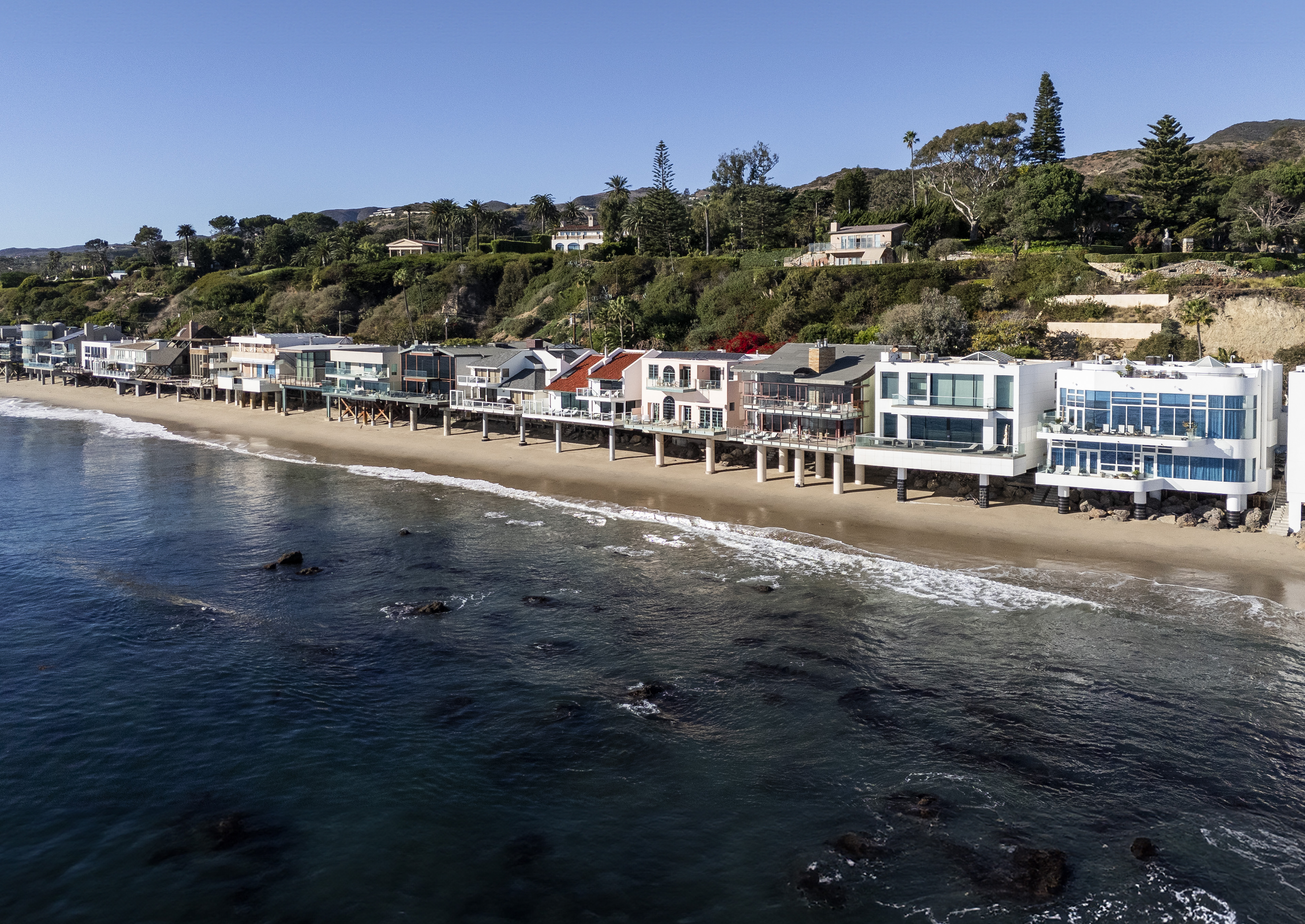
Malibu is not a single market. The 27-mile coastline from Topanga to the Ventura County line holds more than a dozen distinct enclaves, and after almost two decades working this coast I can tell you the differences between them — in price, in privacy, in beach access, in who actually lives there — are larger than buyers from outside the area expect. Three names in particular define the very top of the Malibu market: the Malibu Colony, Carbon Beach (better known as Billionaire's Beach), and Point Dume.
These are the addresses you read about when an entertainment mogul, a tech founder, a hedge fund principal, or an international UHNW family acquires California coastal property. They are also fundamentally different from each other in ways that matter when you're choosing between them.
I've spent years walking these specific submarkets, sitting inside the houses, and getting to know the gate cultures, the long-term owners, and the off-market patterns that don't show up in any MLS feed. What follows is the honest version of what each enclave actually is, what the published comparable sales mean — and don't mean — and how I help my clients decide which of the three (if any) fits the way they really want to live.
The Quick Snapshot
As of early 2026, the three enclaves price roughly as follows:
The Malibu Colony. Roughly 100 oceanfront homes on a single gated private road. Pricing typically runs $20 million to $80 million, with the rare standout crossing $100 million. These homes have direct walk-out beach access and a community character you genuinely cannot replicate anywhere else in California.
Carbon Beach (Billionaire's Beach). Roughly 70 oceanfront homes along Pacific Coast Highway in central Malibu, priced from about $30 million to north of $200 million. Carbon is the most expensive single stretch of residential beach in the United States by price per linear foot of sand.
Point Dume. A blufftop and PCH-up area with the largest residential parcels in coastal Malibu — ranging from $8 million for smaller inland homes to well over $100 million for the largest blufftop estates. Point Dume offers something the beachfront enclaves simply cannot: more privacy, more land, less direct beach, and views and acreage that sit in a category of their own.
The Malibu Colony — The Original Hollywood Beach
The Colony is the oldest of the three. May Knight Rindge developed the community in the 1920s — heir to the family that owned much of what is now Malibu — and the original tenants were the early Hollywood names: Gary Cooper, Gloria Swanson, Clara Bow. The gated entrance off Malibu Road and the single private street running parallel to the beach have been the defining features for nearly a century, and the cultural weight that has accumulated here is genuinely unique among Malibu enclaves.
Geography and parcels. The Colony sits on Malibu Road just west of the Malibu Pier. The community runs about three-quarters of a mile. Homes on the south side of the private road sit directly on Malibu Lagoon Beach; homes on the north side face the lagoon and the mountains. South-side oceanfront parcels are the prestige inventory — typically 50 to 80 feet of beach frontage with lot depths in the 100 to 150 foot range. North-side parcels are smaller and trade at meaningful discounts to oceanfront, though some have their own private lagoon access.
Architecture. The Colony has evolved a long way from its 1920s beach-cottage origins. You'll find preserved original cottages (rare, increasingly precious for their historic character), full gut renovations by name architects, and contemporary new builds in the $30 to $60 million range. The mix is part of what makes the community feel so different from a master-planned development. There's no single architectural language here, and the variety is part of the charm.
The gate, the HOA, the community. The Malibu Colony is fully gated with 24-hour security. The Malibu Colony Homeowners Association manages the gate, the private road, the common areas, and the rules that govern construction, rentals, and use. HOA dues are substantial. What I tell buyers who haven't lived in a gated community quite like this before: the Colony functions more like a private club than a typical HOA. Neighbors know each other. There are community functions. The social fabric is genuinely tight in a way that the wider Westside isn't.
Beach access. This is the part buyers tend to underestimate until they spend a weekend in a Colony home. Because the private road runs immediately behind the oceanfront houses, you walk out your back door onto the sand. The beach itself is technically public below the mean high tide line — every California beach is — but the public access points are at the east and west ends of the community, which means the central stretch stays quiet and residential. If daily beach use is part of how you actually want to live, this is the enclave that delivers it most easily.
Who chooses the Colony. The Colony attracts buyers who want their oceanfront with a community wrapped around it — a sense of being part of a place rather than alone on a beach. Entertainment industry families have been a constant for almost a century, and the social culture reflects that. A meaningful percentage of the Colony is second-home, too: primary residences are elsewhere, and the Colony is the retreat.
Carbon Beach (Billionaire's Beach) — The Top of the Market
If the Colony represents the cultural history of Malibu, Carbon Beach represents its present-day pinnacle. The roughly mile-long stretch of beachfront homes along PCH between Carbon Canyon Road and Malibu Pier has become — measured by price per linear foot of sand — the most expensive residential beach in the United States.
Geography and parcels. Carbon sits on the south side of PCH, with each home occupying a parcel that runs from the highway down to the ocean. No gate, no private road, no shared infrastructure. Each property is its own island, accessed directly from PCH, with garage and entry on the highway side and private beach behind. The parcels are narrow (typically 30 to 60 feet of beach frontage) and shallow (typically 100 to 200 feet from PCH to the ocean). This is the point that surprises first-time Malibu buyers more than any other: Carbon Beach lots are small.
Architecture. The architectural ambition on Carbon is unusual even by Malibu standards. Several of the homes have been designed by name architects — Richard Meier, Marmol Radziner, and others — and the trend toward contemporary, museum-quality residences has only accelerated. The tier above $50 million is now almost entirely contemporary new construction or near-new construction.
No gate, no HOA. Carbon has no community structure. No gated entry, no homeowners' association, no shared amenities. Each property exists on its own. Security is handled at the individual property level, almost always with serious infrastructure. When I'm comparing Carbon to the Colony with a client, this is one of the differences I want them to feel clearly: Carbon offers extraordinary individual privacy, but no community. The Colony offers community within a gated structure.
Beach access. Each Carbon home has direct beach access from the property. The beach is, like every California beach, technically public below mean high tide, but the public access points along this stretch of PCH are limited and the practical experience is significantly more private than most public beaches. The well-known public-access disputes along Carbon over the years have shifted the legal landscape, but the practical privacy stays strong for most owners.
PCH — the elephant. No honest description of Carbon Beach can leave out Pacific Coast Highway. It runs immediately in front of every house. The noise, the traffic, the visual presence of PCH is a real factor in the buying decision. Sophisticated owners have invested heavily in acoustic glazing, landscape buffering, and architectural orientation to mitigate it, and the better homes manage it well. But it is always there. If you've romanticized the idea of Malibu oceanfront without spending real time directly on PCH, please spend that time before you make an offer. I'd rather you walk into the decision clear-eyed than discover the highway after closing.
Who chooses Carbon. Carbon attracts buyers who want the single most exclusive oceanfront property in California, who value individual privacy over community feel, and who are willing to manage PCH in exchange for an unobstructed ocean orientation. The buyer pool skews more international, more institutional, and more focused on the property as a long-term store of value than the Colony's buyer pool does.
Point Dume — The Other Top of the Market
Point Dume is the third archetype of high-end Malibu, and in a lot of ways it's the enclave that has appreciated most consistently over the last two decades. The neighborhood sits west of central Malibu, on a peninsula that juts into the Pacific between Zuma Beach and Westward Beach. The geography — blufftops, large parcels, a different relationship to the ocean — creates a fundamentally different proposition from the Colony or Carbon.
Geography and parcels. Point Dume's residential streets sit primarily on the bluff above the ocean rather than on the beach itself. Parcels here are large by Malibu standards — typically a half acre to two acres, with several estates running ten acres or more. The streets are quiet, the trees are mature, and the overall feel is closer to a private rural neighborhood than a beach community. The blufftop estates have ocean views. The inland streets have mountain views and an even more secluded character.
Beach access. Point Dume's relationship to the ocean is different, and worth understanding before you fall in love with a particular blufftop. Several private community trails (the Point Dume Community Services District manages access) get residents to the beaches below the bluff. The beaches themselves — Westward Beach, the cove below Point Dume — are among the most beautiful in Southern California. But you walk down a trail rather than walking out a back door. For buyers who want the ocean in their daily life but don't need the beach immediately behind the house, Point Dume often delivers a better trade: better views, more privacy, larger parcels, in exchange for slightly less immediate sand.
Architecture. Point Dume has the widest architectural range of the three enclaves. Preserved 1960s and 1970s ranch homes. Significant mid-century modernist estates. A steady stream of contemporary new construction. Several of Malibu's most architecturally significant private residences are on Point Dume, and the larger parcels have allowed for site-specific design at a scale the Colony's tighter lots can't accommodate.
Community character. Point Dume has a distinctive community culture — more local, more residential, more family-oriented than either the Colony or Carbon. Many residents are full-time, raising families here. The elementary school (Point Dume Marine Science Elementary) is a meaningful draw. Point Dume Village handles daily-needs amenities, and the overall feel is much closer to a small coastal town than to either of the more glamorous Malibu addresses.
Who chooses Point Dume. Point Dume attracts buyers who prioritize land and privacy over immediate beach, who often have families and want a real residential community, and who appreciate the more rural Malibu character. A lot of longtime Point Dume residents are entertainment industry creatives, tech founders, and UHNW buyers who specifically did not want the higher-visibility profile of Carbon Beach or the social culture of the Colony.
The Comparison That Matters
For buyers seriously considering all three, the practical decision usually comes down to a small number of trade-offs. These are the ones I walk through at the table.
Daily beach use. The Colony has the most immediate, walkable beach access. Carbon has direct beach access but with PCH at the front door. Point Dume has trail access from the bluff. For families with younger children, or buyers who genuinely use the beach every day, the Colony's immediate access is the strongest answer. For buyers who value the ocean view and proximity but don't need daily sand contact, Point Dume's blufftop properties often deliver the better lifestyle.
Privacy. Carbon offers the most individual privacy — no shared community, no neighbors on a daily basis, individual security infrastructure. Point Dume offers parcel-level privacy through lot size and landscape. The Colony offers community-level privacy within a gated structure, but less individual privacy, because of the tight community fabric.
Land. Point Dume wins clearly. Typically five to ten times the parcel size of a Colony or Carbon property. If you value outdoor space, gardens, equestrian use, or simply the feeling of land around the home, Point Dume is the answer.
PCH. The Colony is set back from PCH by Malibu Road, which mitigates the highway noticeably. Carbon is on PCH. Point Dume is meaningfully removed from PCH by the residential streets that climb the peninsula. If you're sensitive to highway noise or visual presence, this is a major variable.
Community versus independence. The Colony has the strongest community structure. Carbon has none. Point Dume has a residential community feel but no formal gating or HOA in most areas. The right answer here depends on whether you want neighbors to be part of your experience or not.
Resale and liquidity. All three submarkets are relatively illiquid by Westside standards. Transactions happen, but the buyer pool for $30 to $100 million coastal Malibu property is small and global. Pricing correctly at sale and being patient about timing matter more here than in almost any other Westside submarket. Among the three, Carbon Beach has historically had the most discoverable transaction history (because of its visibility); the Colony and Point Dume have had more transactions happen off-market.
A Note on Paradise Cove and Other Enclaves
A few other Malibu enclaves deserve a brief word for buyers considering the broader market.
Paradise Cove — the gated community of mobile homes (which can trade for $5 to $15 million for the more developed properties, despite their formal status as mobile homes) — is its own unique market and not directly comparable to the three enclaves above.
Big Rock and Las Tunas — the easternmost beach communities in Malibu, closer to the Santa Monica city line. These trade at meaningful discounts to Carbon Beach for comparable oceanfront and offer the easiest access to Santa Monica and the rest of Los Angeles. Pricing typically runs $10 million to $30 million for oceanfront homes.
La Costa Beach — a small enclave just east of the Malibu Pier with a similar PCH-front character to Carbon. Pricing typically runs $15 million to $50 million.
Sea Level Drive (Broad Beach) — a one-mile stretch of beachfront homes west of central Malibu that historically traded comparably to the Colony but has faced significant coastal erosion challenges over the past decade. Pricing has been volatile as a result, with a wide range depending on parcel-specific sand conditions and seawall infrastructure.
Encinal Bluffs — a smaller blufftop enclave between Point Dume and the Ventura County line, with character similar to Point Dume but smaller community scale and lower transaction volume.
For buyers initially focused on the Colony, Carbon, or Point Dume, it's worth understanding these alternatives. Sometimes one of them represents meaningful value or a specific lifestyle fit that the headline enclaves don't quite match.
Insurance and Fire Risk in 2026
A serious word about insurance, because the Malibu insurance market has changed materially over the past several years, and the post-January-2025 fire environment has intensified the trend. Major carriers have reduced their exposure across coastal Los Angeles, and Malibu has been particularly affected. A lot of buyers are now turning to the California FAIR Plan as primary coverage, with surplus lines carriers providing wrap-around at real premium.
Each of the three enclaves has its own fire risk profile. Carbon Beach's narrow beachfront orientation means the fire exposure is primarily from the inland side, but the highway corridor and the canyons north of PCH are a genuine risk. The Colony's gated structure provides no specific fire benefit, but its location on the lagoon and the relatively low-elevation, oceanfront orientation gives it less exposure than the canyons. Point Dume's blufftop and inland positioning means more direct exposure to canyon-driven fire patterns from Zuma, Latigo, and the surrounding canyons.
I tell every Malibu buyer to start the insurance assessment early in diligence — before lot or property selection narrows. The cost differential between specific addresses can be substantial, and several Malibu insurance specialists can model the carrier landscape for a specific address before you commit. This is not a step to leave for after the offer.
The Honest Recommendation Framework
For UHNW buyers seriously considering these three enclaves, the framework I work through with clients usually starts with a small set of questions.
How will you use the property? Primary residence with family changes the calculation dramatically versus second home or retreat. Primary residences benefit from Point Dume's community character. Second homes can work in any of the three. Investment-only thinking is, in my view, not a strong basis for choosing among these specifically — there are better real estate investments than ultra-high-end coastal Malibu if pure returns are the objective.
How important is community? If you want neighbors to be part of your experience, the Colony is the strongest choice. Point Dume is a softer version of the same answer. If you want individual privacy without community, Carbon is the clear answer.
How important is land? Point Dume wins. The Colony has tight lots. Carbon has very tight lots.
How important is immediate beach? The Colony wins. Carbon is second (with PCH between you and the home). Point Dume requires a walk down the community trails to the sand.
How sensitive are you to PCH? Carbon owners have to accept PCH. The Colony mitigates it. Point Dume is essentially free of it.
How long is your hold? All three communities reward patience and a long hold. The buyer who is honestly comfortable holding for ten or twenty years has very different optimal answers than the buyer who may want flexibility within three to five.
Looking Ahead
The three enclaves enter 2026 with different momentum. The Colony has benefited from continued international UHNW interest in California coastal real estate as a long-term store of value, and from the cultural cachet the community has accumulated over a century. Carbon Beach has continued to set the upper bound for coastal pricing in the United States, with a small number of trophy transactions each year that re-establish the ceiling. Point Dume has been the most consistent performer over the last decade and continues to draw the deepest buyer pool of the three, especially among family buyers and creatives who prioritize lifestyle over visibility.
If you're entering this market for the first time, my most important advice is the simplest: spend time in each before deciding. Walk the Colony private road in the late afternoon. Drive PCH past Carbon Beach at different times of day. Visit Point Dume Village on a Saturday morning. The three places feel genuinely different in person, and the right answer is almost always more obvious after you've been in each than it ever is on paper.
Working with Someone Who Knows the Doors
The Malibu high end is, more than most Westside markets, a relationship business. A significant percentage of the most desirable transactions happen off-market, between agents who have worked the community for years and who know which owners are quietly open to the right offer. Public MLS data captures maybe two-thirds of true market activity at the very top of Malibu; the rest happens through networks that take years to develop.
For buyers seriously entering this market, the partner who can introduce you to inventory that has not yet appeared publicly — and represent your interest discreetly to other agents and to owners — is often the most valuable element of the search. The same is true on the sell side. Pricing a Colony, Carbon, or Point Dume property correctly requires understanding not just public comparables but the off-market activity that doesn't appear in any data feed.
If you're thinking about a move to one of these three enclaves — or considering a sale — I'd welcome a private conversation about your situation. There are details that matter at this tier that aren't part of any public guide, and the right answer for you may not be the loudest one.
Monica Antola is a luxury real estate advisor with over 18 years of experience on the Westside of Los Angeles, specializing in Malibu, Pacific Palisades, Brentwood, Santa Monica, and the coastal communities. Chairman's Circle Platinum, Top 1.5% in The Global Network. REALM Global member. DRE# 01826288.