
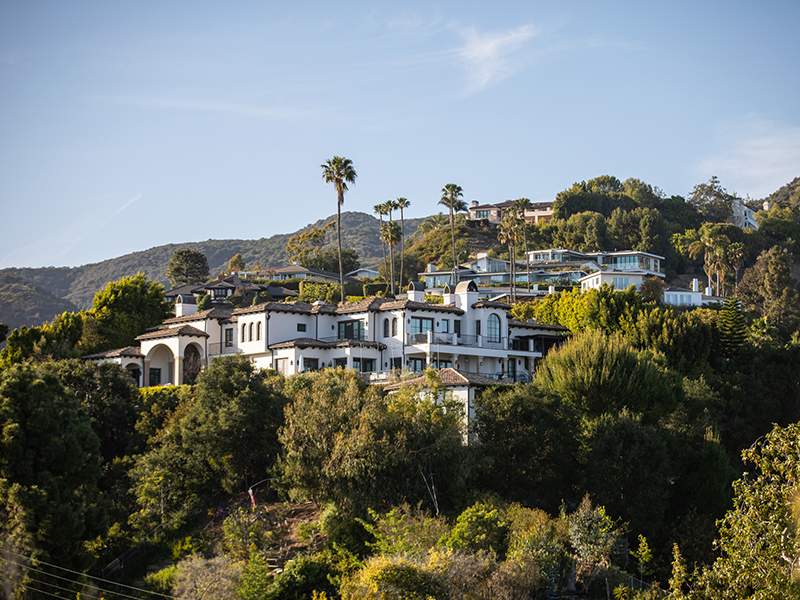
Buying a luxury home in Pacific Palisades after the 2025 wildfires means navigating a market with more than 300 active lot listings (up from seven a year ago), an average lot price of $2.1 million, a median price for standing homes of approximately $3.5 million (down 16.7% year over year), and a rebuild cycle that will reshape this community for the next fifty years. As of May 2026, over 2,600 rebuild permits have been issued across Palisades and Altadena, the first Certificate of Occupancy was issued November 21, 2025 at 915 N Kagawa St, and LADWP has declared tap water safe in all previously-restricted Palisades zones. This guide explains what buyers, owners, and investors need to know — written by Monica Antola of Antola Coastal Group at Compass, who has represented 19 Pacific Palisades transactions and specializes in this post-fire market.
For those watching from the outside, the headlines paint a picture of devastation. For those of us who live and work here, the reality is more nuanced — and in many ways, more compelling. Pacific Palisades is not just rebuilding. It is reimagining itself, and the decisions being made right now will shape this community for the next fifty years.
The Scope of What Happened
The January 2025 fires destroyed approximately 5,900 homes across the Palisades, fundamentally altering the real estate inventory in one of LA's most coveted coastal neighborhoods. Streets that once featured some of the finest residential architecture on the Westside are now a patchwork of cleared lots, active construction zones, and untouched homes that survived the fire line.
What makes Pacific Palisades unusual — and what many outside observers don't fully appreciate — is how limited the housing stock was even before the fires. This was never a neighborhood with surplus inventory. Homes traded infrequently, often off-market, and demand consistently outpaced supply. The fires didn't just remove homes from the market. They created a completely new asset class: vacant land in one of the most desirable zip codes in the country.
Where the Market Stands Today
As of early 2026, the numbers tell an extraordinary story. There are now over 300 active lot listings in Pacific Palisades — compared to just seven at the same time last year. Properties that once would have been unattainable as land are now available, and the market is responding.
Lot prices have stabilized around $2.1 million on average, though location within the Palisades creates significant variation. Parcels along the Riviera — which actually appreciated 10 to 15 percent since the fires — command premiums that reflect their ocean views, lot size, and proximity to the Village. Meanwhile, properties in the Highlands and along the canyon corridors have seen more modest pricing, creating entry points that didn't exist eighteen months ago.
The median home price for standing properties sits at approximately $3.5 million, down 16.7 percent year-over-year. But that number requires context. The decline largely reflects the shift in what's being sold — more lots, fewer finished homes — rather than a fundamental erosion of property values. Homes that survived the fire with desirable features and locations are commanding strong prices, and in some micro-markets, they're trading above pre-fire levels.
Days on market have dropped to 55, down from 111 a year ago. The market is moving faster, not slower.
The Rebuild Timeline: What's Actually Happening
One of the most common questions from buyers and owners alike is straightforward: how long does this take?
The answer is more encouraging than many expected. Over 650 homeowners have received rebuilding permits, with the City now processing roughly 100 approvals per month. The average permitting timeline has settled at around three and a half months — faster than the early projections that had many homeowners bracing for a year or more of bureaucratic delays.
The bottleneck, it turns out, isn't government approval. It's insurance. Many homeowners are caught between insufficient coverage and the actual cost of rebuilding to current codes, which has increased substantially. Construction costs in the Palisades now range from $500 to $800 per square foot for quality rebuilds, and that number climbs quickly for custom architectural work.
For owners weighing the rebuild decision, the math breaks down into three scenarios:
Rebuild and stay. If your insurance covers 80 percent or more of current construction costs, and you intend to live in the home, this is generally the strongest financial decision. The underlying land value supports the investment, and the rebuilt home will carry modern specifications that command premium resale value down the road.
Rebuild and sell. A more speculative path, but one with merit if the lot is in a premium location. Finished new-construction homes in the Palisades are expected to list well above $1,000 per square foot when the first wave of rebuilds completes — which would represent significant returns over lot purchase plus construction costs.
Sell the lot. For owners who don't plan to return or can't bridge the insurance gap, selling the vacant parcel captures current land value without the risk and complexity of managing a construction project. At $2.1 million average, the market is providing meaningful liquidity.
The Investor Factor
One of the most significant dynamics reshaping the Palisades market is institutional and private investor activity. Approximately 40 percent of vacant lot sales in the 90272 zip code have gone to investors — a ratio that has drawn both attention and concern from longtime residents.
Investors purchased 48 of 119 vacant lots during the third quarter alone, and the pace hasn't slowed. The investment thesis is straightforward: acquire land at post-fire pricing, build to current luxury specifications, and sell into a market where finished inventory will be extremely limited for the next three to five years.
For individual buyers, this means competition for the best lots is real and moving quickly. Properties with ocean views, southern exposure, and proximity to Sunset Boulevard or the Village are attracting multiple offers. Lots that sit on quieter streets or in the upper Highlands are more negotiable, but they won't stay that way indefinitely as investor capital continues to flow in.
Insurance: The Hidden Variable
If there's one factor that deserves more attention than it's getting, it's insurance. The Palisades fire didn't just destroy homes — it fundamentally changed how carriers assess risk across the entire Westside coastal corridor.
Buyers considering a lot purchase or rebuild should expect significantly higher premiums than pre-fire levels. Many major carriers have reduced their exposure in fire-adjacent zones, which means buyers are increasingly turning to the California FAIR Plan or surplus lines carriers that come with higher costs and more limited coverage.
For buyers coming from outside the area, this is an expense that can materially affect the total cost of ownership. A thorough insurance assessment should happen early in the process — before you fall in love with a specific parcel — because the cost differential between locations within the Palisades can be substantial.
What Makes This Moment Different
Real estate markets recover from disasters. We've seen it in Malibu, in Paradise, in communities across the country. What makes Pacific Palisades different is the underlying demand profile.
This is a neighborhood where people want to live — not because of a market cycle or an investment trend, but because of what the community offers. The proximity to the ocean. The village atmosphere. The hiking trails that connect to Will Rogers and Topanga. The school system. The sense of belonging to something both intimate and iconic.
Those fundamentals haven't changed. If anything, the rebuilding process is creating an opportunity to enhance what was already one of the most desirable residential environments in Los Angeles. New construction will bring modern floor plans, energy efficiency, and updated infrastructure to a community whose housing stock, while beautiful, was aging.
The buyers who move now — whether into standing homes or onto vacant lots — are positioning themselves in a market that has historically rewarded patience and conviction. Pacific Palisades has never been a place for speculation. It's a place for people who understand that coastal Los Angeles real estate, in the right location, is one of the most resilient long-term investments available.
Looking Ahead
Industry analysts expect the number of active lot listings to peak around 500 by mid-to-late 2026, as additional properties come to market when temporary housing insurance coverage expires. That window will represent the deepest inventory this neighborhood has seen in modern memory — and likely the last time buyers will have this range of options in the Palisades for decades to come.
The community is rebuilding. Permits are moving. The market is finding its footing. And for those considering a move to the coast, or a return to a neighborhood they never wanted to leave, the path forward is becoming clearer every month.
For those considering a move to Pacific Palisades — whether it's a standing home, a lot with rebuild potential, or a long-term investment in one of LA's most iconic communities — working with someone who knows every street, every micro-market, and every nuance of this evolving landscape can make all the difference.
Monica Antola is a luxury real estate advisor with over 18 years of experience on the Westside of Los Angeles, specializing in Pacific Palisades, Malibu, Brentwood, and the coastal communities. Chairman's Circle Platinum, Top 1.5% in The Global Network. REALM Global member. DRE# 01826288.