
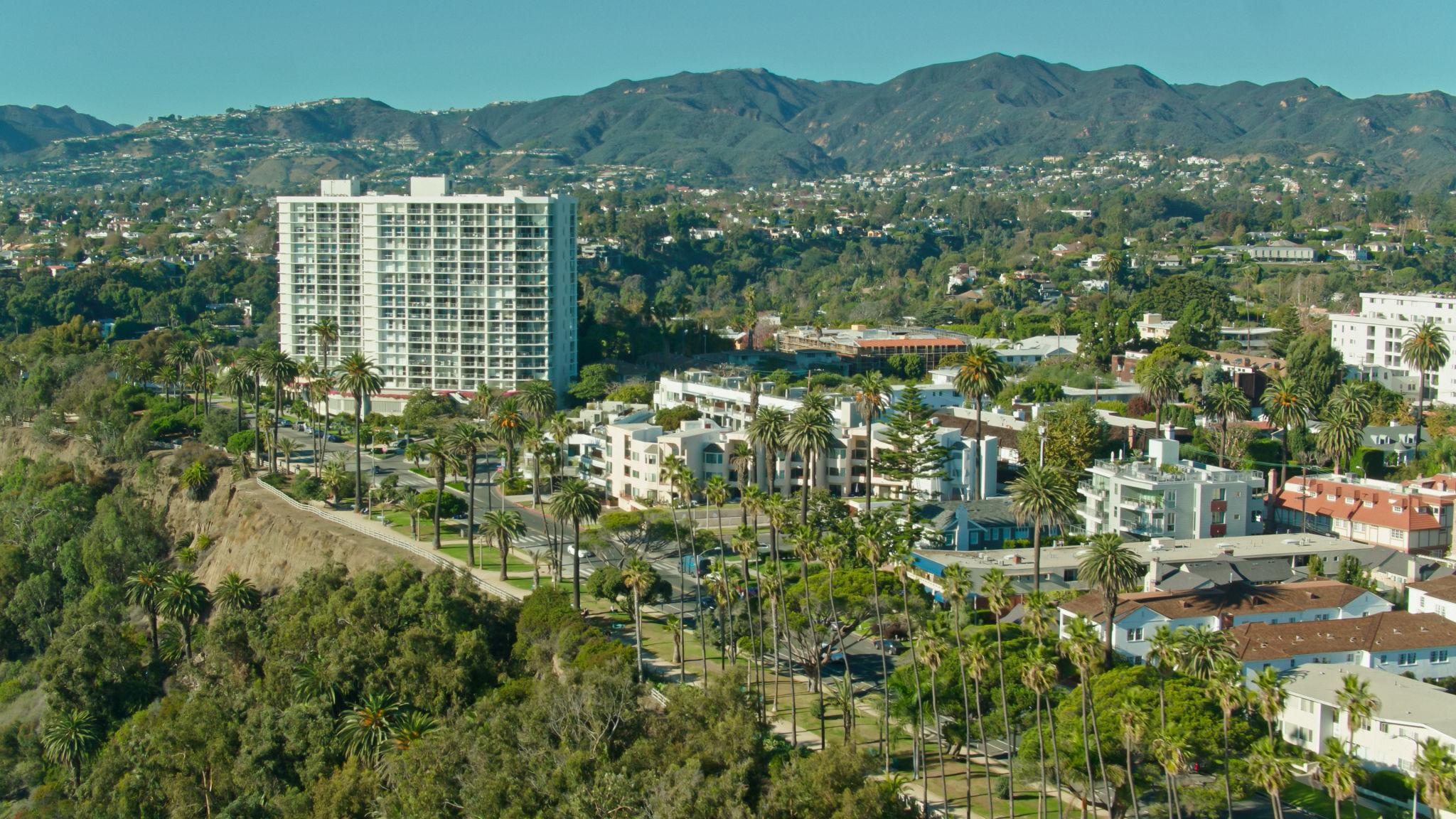
Santa Monica entered 2026 with a median single-family home price hovering near $3.4 million and a luxury segment — homes above $5 million — that has continued to absorb inventory at a faster clip than the broader Westside. What makes this 8.3-square-mile coastal city different from its neighbors is not any single factor but the unusual stack of them: an ocean, a walkable downtown, six distinct residential pockets that each price differently, and a school district that has historically been one of the strongest reasons buyers commit to the zip code rather than the address.
For buyers entering Santa Monica for the first time, and for owners considering a move within the city, the most important thing to understand is that the price you pay here is rarely about the house. It's about which side of which street that house sits on. A few blocks can mean a million dollars. The neighborhoods below explain why.
Why Santa Monica Plays Differently in 2026
The post-pandemic shift in Westside real estate, followed by the January 2025 Palisades fires, has changed Santa Monica's demand profile in ways that aren't always reflected in headline numbers. Buyers displaced from the Palisades have absorbed inventory that would otherwise have softened prices. Families who once might have considered Brentwood or Pacific Palisades for the school system are looking harder at Santa Monica's Samohi feeder pattern. And UHNW buyers from outside California — particularly from the Bay Area, New York, and increasingly from international markets — have continued to treat Santa Monica oceanfront and North of Montana inventory as a reserve currency.
The result is a market where the very top end is firm to rising, the middle is competitive but rational, and the bottom of the luxury segment — homes in the $2.5 to $4 million range — has become the most contested part of the market. Days on market for well-presented homes in that range now run 30 to 45 days. Five years ago, the same product sat for 90 days.
North of Montana — The Gold Standard
If there is a single neighborhood that defines Santa Monica luxury, it is North of Montana. The area extends from Montana Avenue north to San Vicente Boulevard, bounded by 7th Street to the east and Ocean Avenue to the west. The architecture is predominantly traditional — Cape Cods, Spanish Revivals, English Tudors, and a growing collection of contemporary new builds — and the lot sizes (50 by 150 feet is typical, with the deeper north-south orientation prized for light) explain much of the price.
As of early 2026, single-family homes in North of Montana typically trade between $5 million and $20 million, with the rare estate property north of Adelaide Drive crossing $25 million. Price per square foot generally falls in the $1,800 to $2,800 range, climbing toward $3,500 for new construction on the most coveted blocks. The premium streets — Georgina, Marguerita, San Vicente, Adelaide — command meaningful premiums over the parallel streets just one block south.
Buyers in this part of Santa Monica are paying for several things at once: proximity to Montana Avenue's shops and restaurants, walking distance to the ocean and Palisades Park, the Roosevelt Elementary School attendance area, and the kind of architectural fabric that has become increasingly rare on the Westside. Many of the original homes are protected by their owners' commitment to preservation, and the streetscape has changed less in twenty years than almost any comparable neighborhood in Los Angeles.
For UHNW buyers, North of Montana offers something that very few coastal locations can — a true single-family residential environment within walking distance of a working downtown and an iconic beach. It is one of the few places in Southern California where children walk to school, parents walk to coffee, and the lifestyle does not require a car for daily needs.
Sunset Park — Value, Schools, and a Quiet Reinvention
South of Pico Boulevard and east of Lincoln, Sunset Park has long been one of Santa Monica's quietest luxury markets — and one of the most rewarding for buyers who want value without sacrificing the Santa Monica address. The neighborhood is largely composed of post-war single-family homes on lots ranging from 5,000 to 7,500 square feet, with a growing share of teardowns being replaced by thoughtfully designed modern homes in the $4 to $7 million range.
Median single-family pricing in Sunset Park in 2026 runs in the $2.8 to $4.5 million range, with renovated or rebuilt homes regularly trading between $5 million and $8 million on premium streets. Price per square foot generally falls between $1,200 and $1,700, which represents one of the better values in coastal Santa Monica for buyers who want a single-family home with yard, garage, and proximity to the airport area's evolving creative-class amenities.
The school zone here is largely Will Rogers Elementary, which feeds into Lincoln Middle School and then to Santa Monica High School (Samohi). For families, this is the practical reason Sunset Park has held its premium against neighboring parts of Mar Vista or Venice — the Santa Monica-Malibu Unified School District remains a genuine differentiator, and crossing into LAUSD changes the calculation significantly for many buyers.
What has changed in Sunset Park over the last five years is the architectural ambition. Where the neighborhood was once defined by 1940s and 1950s ranch homes, the current generation of builders has introduced contemporary homes with rooftop decks, glass walls, and the kind of indoor-outdoor living that previously required a beach address. The streets near Clover Park and the south end of Ocean Park Boulevard have become particularly active.
Mid-City — The Connector
Mid-City — bounded roughly by Wilshire to the north, Pico to the south, Lincoln to the west, and the city limit at Centinela to the east — is Santa Monica's least-defined luxury neighborhood, and that ambiguity has historically meant value. The area is a mix of Spanish bungalows, mid-century apartments, and a growing share of new contemporary homes, with single-family prices typically in the $2.2 to $3.8 million range and renovated properties pushing into the mid-$4 millions.
What Mid-City offers is access. From most streets, you are 10 minutes to the beach, 5 minutes to the Third Street Promenade, and within reach of both Sunset Park to the south and North of Montana to the north. The Expo Line at the 17th Street/SMC station has made the eastern edge of Mid-City genuinely commuter-friendly for buyers working in DTLA or Culver City, and the area immediately around Memorial Park has gentrified meaningfully since the line opened.
Buyers in Mid-City are typically those who value the Santa Monica zip code and school district but don't need the prestige addresses that North of Montana commands. For young families, professional couples, and downsizers from larger Westside homes, the math often works better here than it does two miles north.
Ocean Park — Beach Bohemian, Quietly Expensive
Ocean Park sits at the southern end of Santa Monica, bordering Venice. It runs from roughly Pico Boulevard down to Marine Street and from Lincoln Boulevard to the ocean. The neighborhood has a different character from the rest of the city — denser, more bohemian, with a strong cluster of restaurants and shops along Main Street and a tighter community feel that owes more to its turn-of-the-century origins than to the postwar grid that defines much of Santa Monica.
Pricing here is layered. Single-family homes range from approximately $2.5 million for smaller original cottages to $10 million-plus for renovated estates with ocean views or proximity to the beach. The streets closest to the water — Beach, Strand, Bicknell, Hill — carry significant premiums, and the small homes on tiny lots near Main Street trade with surprising consistency at $1,500 to $2,200 per square foot. Multi-unit properties are common in Ocean Park, and the value play for many investor-buyers has been to acquire small income properties and convert or hold for the lifestyle premium the neighborhood commands.
What Ocean Park gives buyers that no other Santa Monica neighborhood does is walking distance to the beach combined with a working commercial district that is genuinely independent and locally owned. The cafes, bookstores, and small retailers along Main Street feel like a neighborhood, not a destination, and that distinction matters to a particular kind of buyer who finds North of Montana too formal and Venice too exposed.
Wilshire Montana — Condo Living Reimagined
The Wilshire Montana corridor — roughly Wilshire Boulevard, Montana Avenue, and the streets between them, east of Ocean Avenue — represents Santa Monica's strongest condo and high-rise market. The combination of walkability, ocean proximity, and full-service buildings has made this part of the city particularly attractive to downsizers, second-home buyers, and a growing number of UHNW buyers who want a lock-and-leave property without managing a yard or a pool.
Luxury condo pricing in Wilshire Montana in 2026 spans an unusually wide range. Entry-level luxury units (1,500 to 2,000 square feet, ocean view or close to it) typically trade in the $1.8 to $3 million range. Full-floor or near-full-floor units in the premier buildings — those along Ocean Avenue with direct ocean views and the kind of services that approach the standards of a Manhattan condo — can range from $5 million to $25 million, with the very top units crossing $30 million for the rare combination of size, view, and building.
Price per square foot in this submarket is genuinely difficult to generalize. A standard luxury condo with partial ocean view runs $1,400 to $2,000 per square foot. Full ocean views push that to $2,500 to $4,000 per square foot, and the highest floors of the best buildings have traded above $5,000 per square foot for the right combination of orientation and finish. The number that matters more than price per square foot in this market is HOA cost, building reserves, and pet policy — three variables that move pricing more than buyers from other markets expect.
Pico Neighborhood — Quiet Outlier
The Pico Neighborhood, north of Pico Boulevard and concentrated around the Virginia Avenue Park area, is Santa Monica's most affordable single-family market. Homes typically trade between $1.6 and $2.8 million, with smaller properties on smaller lots making this the entry point for buyers who want a Santa Monica address and access to the school district without the price of the western neighborhoods.
The area has gentrified over the last decade but remains less expensive than Sunset Park to the south or Mid-City to the north. For buyers prioritizing the Santa Monica-Malibu Unified School District over neighborhood prestige, Pico can represent meaningful value — particularly for first-time buyers and families willing to invest in cosmetic renovations.
Sunset Mesa — The Westside Hidden Gem
A note on Sunset Mesa, which is technically just outside the Santa Monica city limits in Pacific Palisades but is often grouped with Santa Monica luxury submarkets because of its character, schools, and lifestyle profile. The neighborhood sits above the Pacific Coast Highway, between Sunset Boulevard and Topanga Canyon, with views that take in the ocean, the coastline curving south toward Malibu, and on clear days, Catalina.
Sunset Mesa pricing has been particularly active post-Palisades-fire as buyers displaced from the central Palisades have looked uphill for inventory. Single-family homes typically range from $3.5 million to $12 million, with the homes on Castellammare Drive and the streets with unobstructed ocean views commanding the highest premiums. The area was not directly affected by the January 2025 fires, which has reinforced its appeal as a fire-safer alternative to other Palisades neighborhoods.
For buyers who want true ocean views, Marquez Charter Elementary School, and proximity to the Palisades Village (reopening in early 2026) but prefer a less hillside, less canyon-adjacent geography than the central Palisades, Sunset Mesa has become the answer.
The Oceanfront Premium
A few words on the oceanfront premium, because Santa Monica is one of the few markets in coastal Southern California where you can actually buy single-family homes within a half-block of the sand. The premium for ocean-block single-family homes in Santa Monica is substantial — typically 40 to 75 percent over comparable inland properties — and the premium increases sharply for unobstructed ocean views versus partial views.
The Gold Coast — the stretch of beachfront homes along Pacific Coast Highway between the Santa Monica Pier and the northern end of Santa Monica State Beach — represents a unique inventory of approximately 50 to 60 single-family homes directly on the sand. These properties rarely trade, and when they do, sale prices typically range from $15 million to $50 million or more depending on size, condition, and exact location.
For buyers considering oceanfront in Santa Monica, the key variables are: lot size (most are narrow and deep), garage and parking situation (a real consideration on this stretch), view orientation (some properties look directly out at the ocean, others toward the pier or south toward Venice), and the seawall and bluff condition specific to the property. Each of these can move the value materially.
School Zones — The Quiet Driver
Santa Monica's school system is one of the genuine reasons UHNW families choose to live here rather than just visit. The Santa Monica-Malibu Unified School District has historically performed at a level that compares favorably to private schools in many measures, and the elementary school zones in particular drive significant pricing within the city.
Roosevelt Elementary serves much of North of Montana and remains one of the most sought-after public elementaries on the Westside. Franklin Elementary, which serves parts of Mid-City and northern Sunset Park, has been similarly highly regarded. Will Rogers Elementary serves Sunset Park and parts of Mid-City. McKinley Elementary serves the eastern parts of the city, and Edison serves the Pico Neighborhood.
For middle school, Lincoln serves the western and central parts of the city, while John Adams serves the eastern part. Both feed into Santa Monica High School (Samohi), which has been consistently one of the higher-performing public high schools in the LA region, with a reputation for academic rigor, an exceptional arts program, and athletic depth.
For UHNW buyers comparing Santa Monica to other Westside options, the school argument often goes like this: in Pacific Palisades and parts of Brentwood, families typically end up at independent schools (Brentwood, Marlborough, Harvard-Westlake, Crossroads). In Santa Monica, the percentage of UHNW families staying in the public school system is meaningfully higher because the schools genuinely compete with private options. That fact alone changes the calculation for buyers considering total cost of ownership.
What UHNW Buyers Should Know
Santa Monica behaves differently from other LA luxury markets in several specific ways that buyers from outside the area should understand before making a decision.
First, rent control. Multi-unit properties in Santa Monica are subject to one of the strictest rent control regimes in California, and the rules around vacancy decontrol, tenant protections, and Ellis Act use are complex. For buyers considering a duplex, triplex, or any property with non-owner-occupied units, this is a primary diligence item and not a footnote.
Second, the city's housing element compliance and ongoing Builder's Remedy applications have made the entitlement landscape more fluid than at any point in recent memory. For buyers considering a teardown or significant new construction, the rules in 2026 are not the rules that applied in 2020, and the variance between blocks can be material.
Third, building heights and view protections. Santa Monica has unusually granular rules about building heights, setbacks, and view protections, and the specific zoning applied to a parcel can be the difference between a home that can be expanded vertically and one that cannot. This matters most in North of Montana and Wilshire Montana, where the upside of a property often depends on its development potential.
Fourth, the coastal zone overlay. Properties west of Lincoln Boulevard are within the California Coastal Commission's jurisdiction, which adds a layer of approval to any significant exterior work. This is not insurmountable, but it lengthens timelines and can constrain design choices in ways that buyers from non-coastal markets often underestimate.
Fifth — and this matters more than buyers expect — the homeowners' associations and CC&Rs in some of the older Santa Monica subdivisions can be quietly restrictive. North of Montana has several pockets where setback and design covenants from the 1920s still apply in some form, and Wilshire Montana condo buildings vary widely in their pet policies, leasing rules, and renovation approval processes.
Looking Ahead
Santa Monica's 2026 market is being shaped by three forces that should continue to influence pricing through at least 2027: the post-fire displacement of buyers from Pacific Palisades into Santa Monica's higher-end submarkets, the continued migration of UHNW capital into California coastal real estate as a long-term store of value, and a constrained construction pipeline that limits new luxury inventory.
For buyers, this means that waiting for a meaningful price decline in the better neighborhoods is probably not a productive strategy. The fundamentals — limited inventory, deep demand, and a school system that genuinely competes with private options — support current pricing, and the downside risk in well-located Santa Monica property has historically been smaller than in many comparable markets.
For sellers, the message is more nuanced. Well-presented properties in the right submarkets continue to attract multiple offers, but the days of selling anything quickly and at a premium are over. Pricing strategy, staging, and pre-market preparation matter more than they have in five years, and the gap between the right list price and the wrong one has rarely been wider.
For owners weighing whether to renovate, sell as-is, or invest in a more significant redevelopment, the answer continues to depend on the specific block, the specific lot, and the buyer profile most likely to acquire the property. Generic advice in Santa Monica almost always misses, and the difference between a strategic renovation and a wasteful one can run into seven figures.
Working with Someone Who Knows the Blocks
Santa Monica rewards depth of local knowledge. The micro-variations between streets, the zoning quirks that affect specific lots, the school zone boundaries that move with district decisions, the HOA cultures in specific condo buildings — these are details that only show up in transactions, not in market reports.
For buyers entering Santa Monica for the first time, the most valuable thing a real estate advisor can do is walk you through what each neighborhood actually feels like in practice, not what it looks like in photos. For sellers, the value is in pricing strategy and presentation calibrated to the specific buyer pool likely to pay the strongest number.
For owners weighing their next move within Santa Monica — whether that's a downsize, an upsize, or a portfolio decision — the right partner is someone who has been in this market long enough to know how the dynamics actually play out, and who can model the alternatives with realistic numbers rather than aspirational ones.
Monica Antola is a luxury real estate advisor with over 18 years of experience on the Westside of Los Angeles, specializing in Santa Monica, Pacific Palisades, Brentwood, Malibu, and the coastal communities. Chairman's Circle Platinum, Top 1.5% in The Global Network. REALM Global member. DRE# 01826288.