
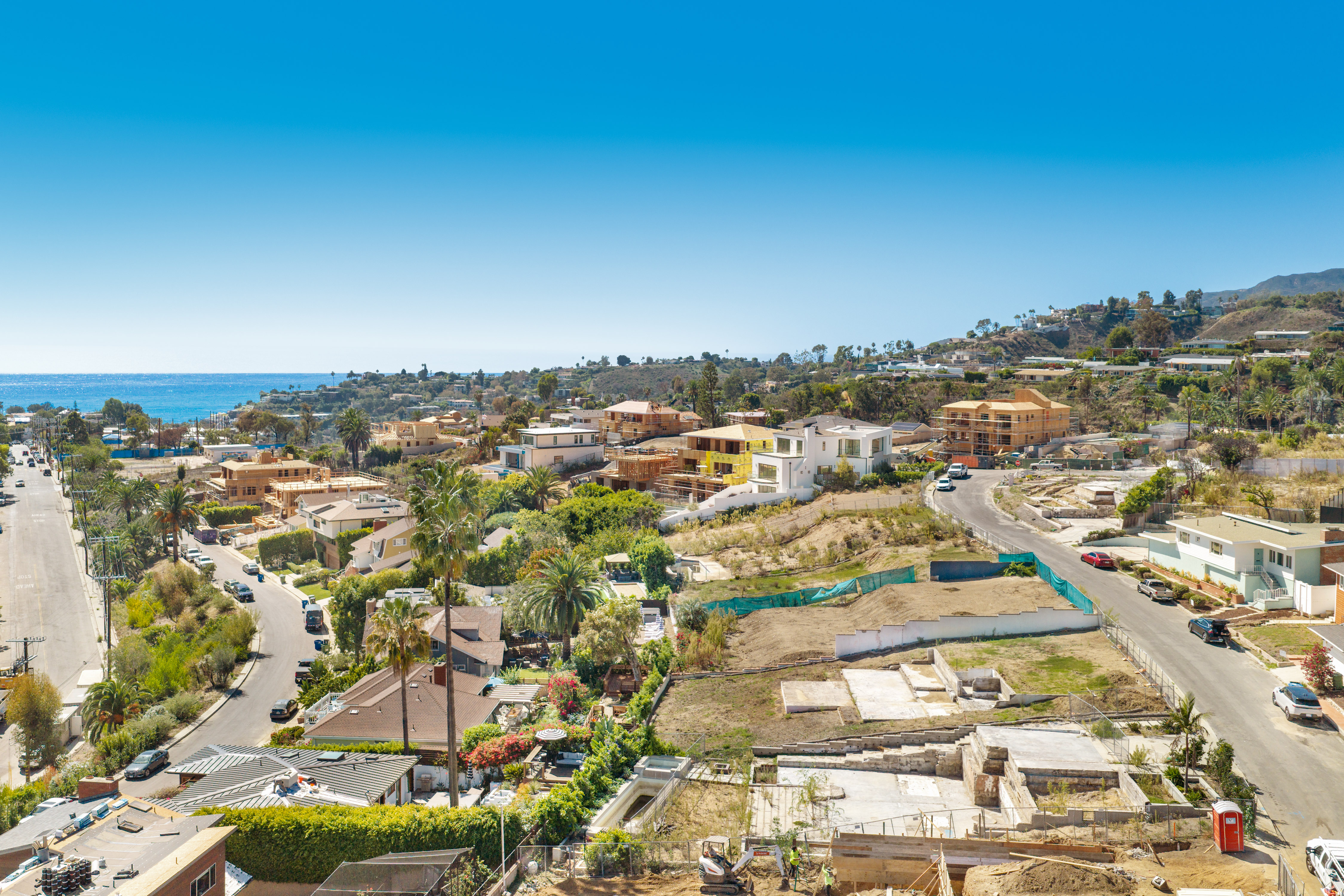
Yes, you can sell a fire damaged house in California, and you can sell the lot a house used to stand on. What you cannot do is stay quiet about it. California requires a seller to deliver a written Transfer Disclosure Statement covering known material facts about the property, plus a Natural Hazard Disclosure identifying whether it sits in a designated fire hazard severity zone (California Department of Real Estate). I have worked this coastline for 18 years and since 2025 this is the conversation I have most often with Palisades and Malibu owners. In the 30 days to October 1, 2026 the median Palisades lot sold for $1,515,000 at 95% of asking (my market report). Here is what you have to tell a buyer, and what the market is actually paying.
Do you have to disclose fire damage when selling a house in California?
Yes, and the obligation is broader than most sellers assume. California's transfer disclosure regime requires the seller to disclose known conditions that materially affect the value or desirability of the property. Past fire damage is squarely within that, whether or not it has been repaired, and whether or not an insurer paid for the repair.
Two separate documents carry it:
The Real Estate Transfer Disclosure Statement. The seller's own written account of what they know about the property's condition, including damage and repairs. The Department of Real Estate's disclosure guidance sets out the scope.
The Natural Hazard Disclosure Statement, required under Civil Code section 1103, which tells a buyer whether the property lies in a special flood hazard area, dam inundation area, earthquake fault or seismic hazard zone, very high fire hazard severity zone or state responsibility area for wildland fire.
These do different jobs. The hazard statement says where the property sits. The transfer statement says what happened to it. A property can be outside a designated hazard zone and still have burned, which is exactly why both exist.
What counts as material, and what if the repair was permitted?
Disclose the event, not just the current condition. A permitted, inspected, fully completed repair is excellent news and you should say so in detail, but it does not erase the obligation to say the fire happened.
The instinct I push back on most is the idea that a clean final inspection makes the history irrelevant. It does not, for a practical reason as much as a legal one: the buyer will find out. Permit records are public, neighbours talk, and insurance history surfaces when the buyer seeks their own coverage. A disclosure you made looks like candour. The same fact discovered later looks like concealment, and that is where deals collapse and lawyers get involved.
Say what burned, when, what was repaired, by whom, under what permit, and what was not repaired. Attach the paperwork. A thick, specific disclosure package consistently sells better than a thin one in this market, because it is the one thing that lets a nervous buyer stop guessing.
What is the "5 foot fire rule" in California?
It is Zone 0, the ember-resistant zone within the first five feet of a structure. Assembly Bill 3074, passed in September 2020, added it to California's defensible space requirements for structures in high and very high fire hazard severity zones.
The Board of Forestry and Fire Protection defines Zone 0 as the horizontal area within five feet of a structure and any outbuildings, attached decks and stairs, including the area underneath attached decks and stair landings. It restricts combustible material in that band, on the reasoning that most structures ignite from embers rather than from an advancing flame front.
For a seller this cuts two ways. Compliance work is relatively cheap and genuinely improves both insurability and buyer confidence. Non-compliance is visible from the driveway to any buyer who has been reading, and it invites a price conversation you would rather not have. If you are listing a standing home in a designated zone, clear Zone 0 before photography.
What are fire damaged lots actually selling for?
Palisades land sold at a median $1,515,000 in the 30 days to October 1, 2026, and sellers took 95% of asking (Palisades lots market report). Twelve lots closed against 110 still active, with a median 119 days on site.
Read those four numbers together, because individually they mislead:
Palisades lots, 30 days to Oct 1 2026 | Figure | What it tells a seller |
|---|---|---|
Median sale price | $1,515,000 | Land still carries real value |
Median share of asking | 95% | Buyers are negotiating, not bidding |
Median days on site | 119 | Expect four months, not four weeks |
Active vs sold | 110 active, 12 sold | Roughly nine months of supply |
Source: my Palisades lots market report for the 30 days to October 1, 2026, underlying data CRMLS. Monthly sale counts this small move around, so read the direction rather than the decimal.
Nine months of standing inventory against twelve monthly sales is a buyer's market by any ordinary reading. That does not mean sell at any price. It means the lots that sell are the ones that answer a buyer's questions before they are asked.
Should you sell as-is or clear and permit first?
Sell as-is when the buyer pool is builders, and do the preparatory work when it is not. The distinction is about who is actually bidding.
Investor and builder buyers price land on what they can put on it and discount heavily for unknowns. They do not pay a premium for a seller's tidy narrative, but they do pay for resolved facts: a completed soils report, confirmed utility reconnection status, a clear permit history, known jurisdiction. Every unresolved question becomes a line item in their offer, usually a larger one than it would have cost you to resolve.
Cash buyers who advertise specifically for fire damaged property are a real and legitimate part of this market, and they are also the fastest and cheapest exit in price terms. Treat an unsolicited cash offer as a floor to measure against, not as the market.
What I would not do is spend heavily on cosmetic work. On a lot sale it returns nothing. Spend on documents.
How do you price a fire damaged property?
Price it off comparable land sales adjusted for buildability, not off what the house was worth before. This is the hardest conversation I have, and it is the one that determines whether a listing sells or ages.
The factors that actually move a Palisades or Malibu lot price are slope, soils, utility reconnection status, which body governs the permit, and whether any foundation is salvageable. Two lots on the same street with the same square footage can differ by several hundred thousand dollars on those grounds alone. I walked through the jurisdiction question in Palisades versus Malibu rebuild jurisdiction, and the buyer's side of the same analysis is in buying fire damaged lots.
One more thing worth knowing if you are weighing selling against rebuilding: on current numbers, building in the Palisades costs more than buying a finished house, which I worked through in whether it is cheaper to buy or build. That arithmetic is part of why land is sitting.
Thinking about selling a lot or a damaged home?
I have watched which Palisades and Malibu parcels sold, which sat, and what separated them. It was rarely price alone. It was usually how much of the buyer's diligence the seller had already done.
Send me the address and I will tell you what your disclosure package needs to contain, what the comparable land sales actually support, and whether the work to resolve the open questions will pay for itself. Call me at 310-595-5181 or get in touch here.
Monica Antola, Antola Coastal Group at Compass. Verify my license anytime through the state: California DRE# 01826288. Nothing here is legal advice; take disclosure questions to a California real estate attorney.
Frequently Asked Questions
Can you sell a fire damaged house in California?
Yes. There is no prohibition on selling fire damaged property or a cleared lot. The requirement is disclosure: a written Transfer Disclosure Statement covering known material facts about the property's condition, and a Natural Hazard Disclosure Statement under Civil Code section 1103 identifying whether it lies in a designated fire hazard zone.
Do you have to disclose fire damage if the repairs were permitted and finished?
Yes. A completed, permitted, inspected repair is a strong selling point and should be documented in full, but it does not remove the obligation to disclose that the fire occurred. Permit records are public and insurance history surfaces when the buyer seeks coverage, so the fact will emerge regardless. Disclosed, it reads as candour; discovered later, it reads as concealment.
What is the "5 foot fire rule" in California?
It is Zone 0, the ember-resistant zone within five feet of a structure, added to California's defensible space requirements by AB 3074 in September 2020. The Board of Forestry defines it as the horizontal area within five feet of a structure and any outbuildings, attached decks and stairs, including beneath attached decks. It restricts combustible material in that band for structures in high and very high fire hazard severity zones.
What are fire damaged lots selling for in Pacific Palisades?
A median $1,515,000 in the 30 days to October 1, 2026, at 95% of asking, with a median 119 days on site and 110 lots active against 12 sales (market report). That is roughly nine months of supply, so sellers should plan for a months-long marketing period rather than a quick sale.
Is it better to sell to a cash buyer or list on the market?
A cash offer from a buyer who specialises in fire damaged property is fast and certain, and it is usually the lowest number you will see. Treat it as a floor to measure the market against rather than as the market. With roughly nine months of lot inventory, a listed sale takes time, so the right answer depends on how much that time is worth to you against the difference in price.
What should be in the disclosure package for a fire damaged property?
Everything you have, organised. What burned and when, what was repaired and by whom, the permits and final inspections, the soils report if one exists, utility reconnection status, any debris clearance documentation, and the governing jurisdiction. In a market with this much standing inventory, the completeness of that package is a genuine competitive advantage, because it is the only thing that lets a cautious buyer stop guessing.