
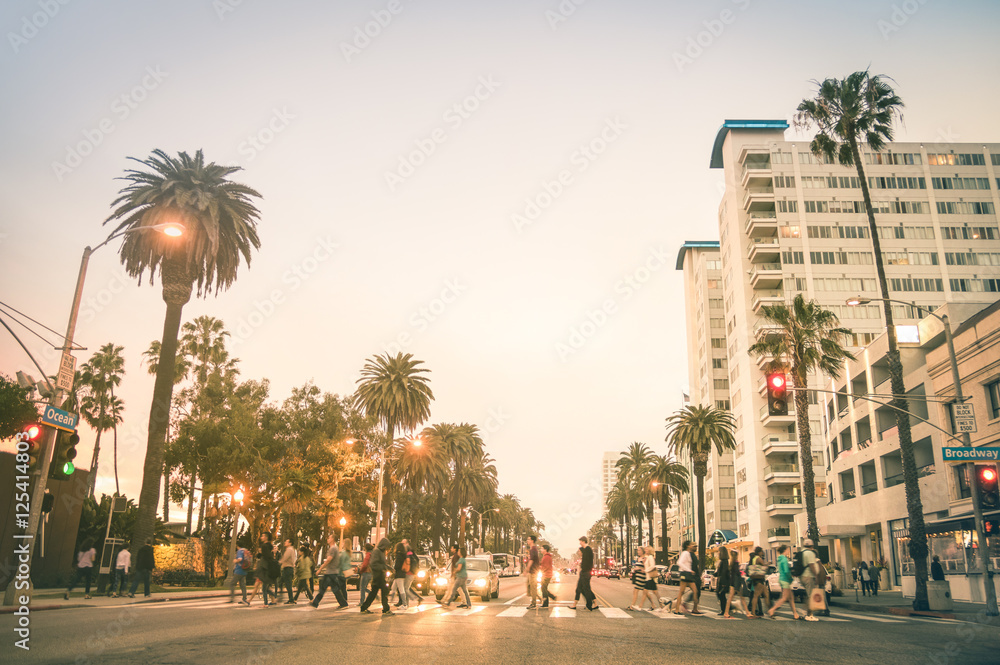
The Westside of Los Angeles has no official boundary. It is a regional name rather than a legal one, generally covering the western side of the Los Angeles basin south of the Santa Monica Mountains, and where exactly it stops is genuinely contested. When the Los Angeles Times ran its Mapping L.A. survey, the most common dividing line people named was the 405 freeway and the most common street was La Cienega Boulevard, but no single definition came close to a majority. The Times eventually settled on 101.28 square miles taking in Beverly Hills, Culver City and Santa Monica, while leaving West Hollywood out. My family has been here five generations and I have sold across this coastline for 18 years. In the 30 days to September 24, 2026 the median sale across my Westside market areas ran from $1,104,000 in Marina del Rey to $5,390,000 in Brentwood, so the label covers a five-fold spread. Here is the practical answer, plus what each part costs.
Where does the Westside of Los Angeles actually begin and end?
The Westside's eastern edge is the part people argue about, and the two candidates are the 405 freeway and La Cienega Boulevard, the two answers that led the Los Angeles Times Mapping L.A. survey. The 405 is the stricter reading and the one most Angelenos give. La Cienega is the looser one, and it pulls in Beverly Hills and the edge of the Miracle Mile.
The other three sides are easier. The Pacific is the western boundary. The Santa Monica Mountains close it off to the north, which is why the Valley is never the Westside no matter how far west it extends. The southern edge is the fuzziest in practice, and most people stop it somewhere around Los Angeles International Airport, which is why the South Bay reads as its own region rather than part of this one.
In everyday use, if you are west of the 405 and south of the mountains, you are on the Westside. That is the definition I use with clients because it matches how the housing market actually behaves, and it is the reading the Mapping L.A. respondents chose most often.
Which neighborhoods are on the Westside of Los Angeles?
The core Westside neighborhoods are Santa Monica, Venice, Pacific Palisades, Brentwood, Marina del Rey, Westchester, Mar Vista, Playa del Rey, Playa Vista & Westwood. Those are the ones almost nobody disputes.
Then there are the contested ones, and it is worth knowing which is which:
Beverly Hills. Included in the Los Angeles Times definition, excluded by plenty of locals who treat it as its own thing. It is its own city with its own school district, which is the practical reason people separate it.
Culver City. Firmly Westside by most readings, though it sat outside the conversation for years before its recent growth.
West Hollywood. Excluded by the Times, even the parts west of La Cienega. Most people agree.
Malibu. Almost always treated separately. More on that below.
The South Bay. Manhattan Beach, Hermosa Beach and Redondo Beach are a distinct coastal region south of the airport, not the Westside, even though I represent buyers there.
Is Malibu part of the Westside of Los Angeles?
Malibu is generally not counted as part of the Westside, despite sitting to the west of it. It is its own incorporated city, it lies along the coast beyond the Palisades, and it is separated from the basin by geography in a way the other communities are not.
The market behaves differently too, which matters more than the label. Malibu trades on oceanfront and bluff position rather than on proximity to the job centers that shape Westside pricing, and its land market has its own dynamics entirely. I covered those in my Malibu and Pacific Palisades comparison.
The useful way to think about it: the Westside is defined by access, and Malibu is defined by isolation. That is most of the reason people pay for each.
What does it cost to buy on the Westside of Los Angeles?
The Westside is not one housing market, it is several, and they range more than five times in price. Here is what actually closed across my market areas in the 30 days to September 24, 2026:
Area | Median sale price | Share of asking | Median days on site | Active listings |
|---|---|---|---|---|
Brentwood | $5,390,000 | 95% | 63 | 118 |
Santa Monica | $3,535,925 | 102% | 29 | 80 |
Pacific Palisades | $3,501,281 | 97% | 65 | 89 |
Venice | $2,362,500 | 97% | 34 | 106 |
Westchester | $1,700,000 | 100% | 43 | 54 |
Marina del Rey | $1,104,000 | 99% | 60 | 166 |
Source: my market reports for the 30 days to September 24, 2026, underlying data CRMLS. Market areas follow MLS search boundaries, which run slightly wider than city lines, so the Marina del Rey figure includes some Mar Vista and Venice addresses.
On those September 2026 medians, a buyer at $1.5 million and a buyer at $5 million are both shopping "the Westside" and will never see the same house (market reports). That is the single most useful thing to understand before you start looking.
Which part of the Westside is moving fastest right now?
Santa Monica is the tightest Westside market as of September 24, 2026, and it is not close. Homes there sold at a median 102% of asking in a median 29 days, the only area in the table where buyers are routinely paying above list (Santa Monica market report).
Brentwood sits at the other end despite being the most expensive: over the same 30 days to September 24, 2026 it ran a median 95% of asking over 63 days, with 118 active listings (Brentwood market report). Expensive and slow are not a contradiction. They usually mean a market where sellers are anchored to yesterday's prices and buyers are not.
Venice is the interesting middle at 97% and 34 days, and Marina del Rey is the softest of the group, which I worked through in detail in the Marina del Rey home-buying guide.
One caution on reading any of this: 8 homes closed in Pacific Palisades over those 30 days against 44 in the South Bay. Thin samples move around month to month, so treat a single month's Palisades median as a signal rather than a settlement.
How should I choose between Westside neighborhoods?
Start from your daily route and your housing type, not from the neighborhood name. The Westside label covers detached estates in Brentwood, canal cottages in Venice, harbor condominiums in Marina del Rey and postwar houses in Westchester. Those are different products, not different price points for the same product.
Three questions sort most buyers quickly:
What does your week actually look like? Airport access makes Westchester and Marina del Rey work for people who fly constantly. Studio and tech commutes point toward Culver City and Playa Vista.
Do you need land? If a yard is non-negotiable, Marina del Rey and much of Venice come off the list immediately, whatever the budget.
What is your tolerance for a project? Pacific Palisades carries rebuild considerations that the rest of the Westside does not, which I covered in the cost of rebuilding in Pacific Palisades.
If you are moving here from outside the region, my Westside relocation guide walks through the practical sequence, and the neighborhood pages cover each community block by block.
Want help narrowing it down?
The Westside question I actually get asked is never "where is it." It is "which part of it fits me." That takes a conversation about how you live rather than a map.
Tell me your budget, your commute and whether you need outdoor space, and I will tell you which two or three Westside communities are worth your weekends and which to skip. Call me at 310-595-5181 or get in touch here.
Monica Antola, Antola Coastal Group at Compass. Verify my license anytime through the state: California DRE# 01826288.
Frequently Asked Questions
What is considered the Westside of Los Angeles?
The Westside is the western portion of the Los Angeles basin, south of the Santa Monica Mountains and generally west of the 405 freeway. There is no official boundary. The Los Angeles Times Mapping L.A. project settled on 101.28 square miles including Beverly Hills, Culver City and Santa Monica while excluding West Hollywood, but its own survey found no single definition came close to a majority.
Is the 405 the eastern boundary of the Westside?
It is the most commonly named one. In the Los Angeles Times survey the 405 freeway was the most frequent answer and La Cienega Boulevard the most frequent street, with the two producing noticeably different maps. Most locals use the 405 in conversation, which is the definition I use with buyers because it matches how the housing market behaves.
Is Santa Monica part of the Westside?
Yes, and it is one of the least disputed members. It is also currently the tightest market in the region: homes sold at a median 102% of asking in a median 29 days over the 30 days to September 24, 2026 (market report), the only Westside area in that period where buyers routinely paid above list.
Is Malibu on the Westside?
Generally no. Malibu is its own city, sits beyond Pacific Palisades along the coast, and is separated from the basin geographically. Its market also trades on oceanfront and bluff position rather than on the job-centre access that drives Westside pricing, so treating it as a separate market is more useful than arguing the label.
Is the South Bay part of the Westside?
No. Manhattan Beach, Hermosa Beach and Redondo Beach form a distinct coastal region south of Los Angeles International Airport. The airport is the practical dividing line most people use. I represent buyers in both regions, but they are separate markets with separate price behaviour.
What is the cheapest part of the Westside to buy in?
Of the areas I track, Marina del Rey had the lowest median sale price at $1,104,000 over the 30 days to September 24, 2026, followed by Westchester at $1,700,000 (market reports). Both are condominium-heavy, which is most of why the medians sit below Brentwood's $5,390,000. Compare housing type before you read anything into the gap.
Thanks — we\'ll be in touch shortly.';});return false;">What's your home worth?
Get a no-obligation valuation from Antola Coastal Group.
Get started