
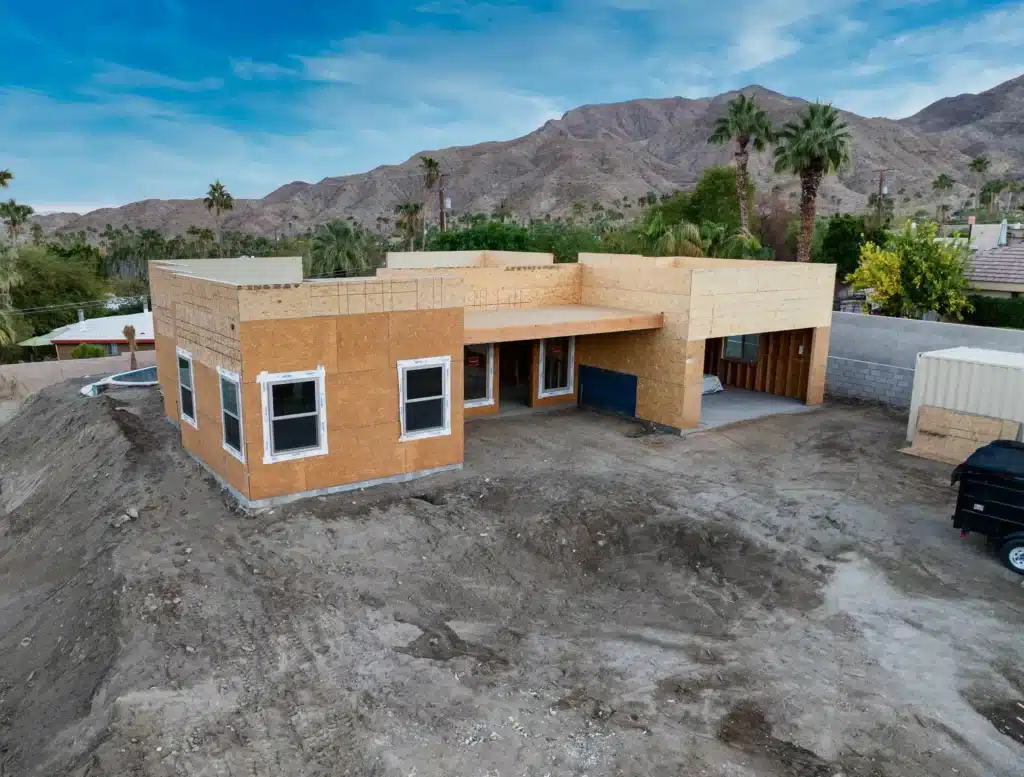
If you own a lot in the Palisades, or you're thinking about buying one to rebuild, you've probably heard two contradictory stories: that the rebuild is hopelessly slow, and that it's racing ahead. The truth, as of mid-2026, is closer to the second than most people expect - and I want to give you the real picture, because I'm walking clients through this process right now.
This is a forward-looking guide to actually rebuilding: where permitting stands, the programs that are speeding it up, realistic timelines, and how to think about choosing an architect and builder. If your question is instead whether to buy a fire-affected lot in the first place, start with my guide to buying fire-damaged lots in Pacific Palisades and then come back here.
Where the rebuild actually stands
The numbers tell a more hopeful story than the headlines:
More than 1,200 rebuilding plans have been approved across 600-plus addresses.
Over 1,000 permits have been issued for roughly 515 addresses.
More than 340 projects are confirmed under construction.
The first Certificate of Occupancy for a rebuilt Palisades home was issued in November 2025 - on Kagawa Street, built by a production homebuilder - meaning families are already moving back in.
Debris removal, the thing that gated everything else, has been completed at more than a thousand properties. The foundation for a broad rebuild is in place.
The city moved faster than after past fires
I've lived through how slowly Los Angeles can move, so I don't say this lightly: the permitting response here has been genuinely fast. The first rebuild permit was issued just 57 days after the fire started - more than twice as fast as after the Camp and Woolsey fires. City officials report Palisades rebuild permits are being approved nearly three times faster than typical single-family projects were before the fire, and more than 70% of the usual single-family permit clearances are no longer required for qualifying rebuilds.
Self-certification - the biggest accelerator
The single most important program to understand is self-certification. Under an emergency executive order, the city created its first plan-check self-certification pilot: a qualified, licensed architect can self-certify that a set of plans meets the California Residential Code, and those plans skip the traditional plan-check queue entirely. (The building itself is still inspected during construction for code compliance - self-certification speeds the paperwork, not the safety checks.) In early 2026, the program was expanded to include licensed civil engineers, widening who can use it.
For you, this is the difference between waiting months in a plan-check line and moving forward in weeks - provided you hire professionals who can use the program.
Standard plans - another shortcut
The city also rolled out a standard plan pilot, where certain pre-reviewed home designs can be approved far more quickly than fully custom plans. If your priority is getting back in sooner rather than building something entirely bespoke, a standard or pre-approved plan can shave significant time off the process. It's a real trade-off worth weighing, and one I talk through with every client rebuilding.
Custom architect vs. production builder
Broadly, rebuilders fall into two camps, and the right answer depends on your goals:
A custom architect and builder. This is the path for an owner who wants a one-of-a-kind home and is willing to trade time for it. You get full design control; you accept a longer timeline and more decisions. Choose an architect who is already fluent in the self-certification program and in fire-hardened design - that fluency is now part of the job, not a bonus.
A production or design-build homebuilder. Several established builders are working at scale in the Palisades and were among the first to deliver finished, occupied homes. They offer speed, fixed processes, and pre-developed plans. You trade some customization for certainty and a faster move-in.
Neither is "better." I help clients match the path to their priorities - speed, budget, design ambition, and how long they can carry two housing costs.
Don't skip the fire-hardening conversation
Any rebuild in this zone must meet California's wildfire building standards (the Chapter 7A materials and assembly requirements) - fire-rated roofing, ember-resistant vents, tempered glazing, and noncombustible materials in key assemblies. This isn't only about code. As I cover in my Westside home insurance and FAIR Plan guide, building to a hardened standard can also lower your insurance premium for years to come. Rebuild smart and you protect both the home and the carrying cost.
Buy a lot and rebuild, or buy a finished rebuild?
This is the strategic question I get most, and there's no universal answer:
Buying a lot to rebuild gives you control and, often, a lower entry price - but you take on time, construction risk, and the carrying cost of building. See the Pacific Palisades lots inventory for what's currently available.
Buying a finished or nearly finished rebuild gives you certainty and immediate occupancy at a premium. As more homes complete in 2026 and beyond, this option keeps expanding.
The right call depends on your timeline, your appetite for the building process, and your budget. That's a conversation, and I'm happy to have it.
Let's talk
Rebuilding in the Palisades is a major undertaking, but it is happening - faster than the doom-and-gloom narrative suggests. Whether you're holding a lot, weighing a purchase, or trying to decide between rebuilding and buying finished, I can help you map the smartest path.
Reach out to me or call 310.595.5181. I'm a Compass Broker Associate with Antola Coastal Group, RealTrends Verified in the top 1.5% nationally, and a lifelong Westsider guiding owners and buyers through the Palisades rebuild right now. For the broader market picture, read this alongside my Pacific Palisades after the fire update.
Frequently Asked Questions
How long does it take to rebuild a home in Pacific Palisades in 2026?
Timelines vary widely by path, but permitting has sped up dramatically - the first permit was issued 57 days after the fire, and qualifying rebuilds now move roughly three times faster than typical pre-fire projects. Self-certified plans and pre-approved standard plans can compress the front-end timeline from months to weeks; construction itself still takes the usual many months.
What is the self-certification program for Palisades rebuilds?
It's a city pilot that lets a licensed architect - and, since early 2026, a licensed civil engineer - certify that plans meet the California Residential Code, allowing those plans to bypass the traditional plan-check line. The building is still inspected during construction; self-certification speeds the paperwork, not the safety review.
How many homes have been permitted or rebuilt in the Palisades so far?
As of mid-2026, more than 1,200 rebuilding plans have been approved across 600-plus addresses, over 1,000 permits have been issued, and 340-plus projects are under construction. The first rebuilt home received its Certificate of Occupancy in November 2025.
Should I buy a lot and rebuild, or buy a finished home?
Buying a lot to rebuild usually means a lower entry price and full control, but you take on time and construction risk. Buying a finished rebuild costs more but gives you certainty and immediate occupancy. The right choice depends on your timeline, budget, and appetite for the building process.
Do I have to rebuild to fire-hardened standards?
Yes. Rebuilds in this zone must meet California's wildfire building standards - fire-rated roofing, ember-resistant vents, tempered glass, and noncombustible materials in key assemblies. Beyond safety and code, hardened construction can also reduce your wildfire insurance premium.
Is it cheaper to rebuild or to buy an existing home in the Palisades?
It depends on the lot, the design, and current construction costs, but buying a lot and rebuilding often has a lower entry price than buying a comparable finished home - at the cost of time and carrying two expenses during construction. I help clients run that comparison on the specific properties they're weighing.
From Monica's channel · November 2025 · 6:11
Rebuilding Pacific Palisades: An Interview with John Hamilton of Hamilton Architects
Monica walks a Palmyra Avenue rebuild site with architect John Hamilton. He explains why the original foundations can be salvaged despite heat damage ("spalling"), how the like-for-like plus 10% rule shapes the new footprint, and why owners who plan to stay a decade should design the house for themselves rather than for resale.
Read the transcript
So, I'm here today with John Hamilton on Palmyra Avenue at a site that he is going to be working with the owners on rebuild post disaster. What's the kind of things that you're dealing with with rebuilding on something like this kind of lot here in the Palisades? Well, first of all, look at all the opportunity.
There's still this beautiful creek that runs through the site. I was here a couple weeks ago and could hear the frogs croaking and there's still green trees. And then the foundations at this site are going to be salvageable.
We're going to have to do some repair work. You can see the exposed rebar. We call that spalling when big chunks of concrete basically pop out of the the retaining wall.
And that's due to the intense heat and it basically baked the back that back wall. So, we're going to have to do some reconstruction on that back wall, but we're also saving a considerable amount of money on the construction of the house by being able to recycle the the foundations. Wow.
So, you know, that's a nice opportunity for the house. And then we have to be a little bit creative in terms of the way that we approach it from a structural perspective, but it allows us a lot a lot of freedom. We're So, this house is going to grow, you know, a 10% in footprint and more than that in the overall square footage of the house, but it's not a lot bigger.
It's kind of a interesting wrinkle in the way that the city's laid out their requirements. Yeah. So John, when you meet with your clients, you know, with a process like this, what is the first thing that you kind of ask them or try to understand about them in the process?
Well, it's really holistic, right? We're trying to get a a very complete picture of who this person is. Are they super social or do they prefer to live, you know, their life in a more solitary basis, right?
Are they having giant parties in the backyard or is that really their meditative space, right? How many kids? All of that.
Do they work at a home? All of those things influence decisions that we're making in the design of the home and influence the way that we're creating spaces to to serve them, right? To be the best house for them.
And then I think a lot of our clients are maybe a little overly cautious about making a house that's going to be good for sale, right? And I I often tell them, well, are you going to be there 10 years? Then don't worry about it because the next person who buys your house is going to remodel it and make it their own anyway.
So, make your house for you, right? And let let your kids worry about how much the the house is worth when you sell it. You know what I mean?
I think if you're going to be there for a while, I think that that's a better attitude to have about it. I agree. Because obviously it's home.
You need to make it yours. Exactly. Yeah, definitely.
What do you think? I mean, obviously kind of dovetailing on that part of resale. What is the one element that you think that someone that's doing reconstruction that they should absolutely make sure they do that gives them true value?
I mean, make something in your house for you. Make it your custom house. If you're a reader, make that cozy library space that you want to go curl up with a book, you know?
make the house particular to your needs and wants and do something a little different. Look at the houses that are from developers and for sale, right? And do something different than that.
Do something for you, right? do something that is You don't need a modern farmhouse. We can actually we're we've got plenty.
If you want one, just go buy one. you know, from my perspective, make a house for you that is aligned with your needs and wants and loves in your life. I've worked with you on different projects and that you really like to put in special little elements.
So, for example, at your own private home, you have a bookcase that comes out and there's a powder room behind it. I like a secret bookcase. that is that's something I like.
But, you know, you and I have this shared love of sailing and if you think about the ceiling in my kitchen, that is the inside of an upside down boat, right? With the ribs of a ship kind of going back and forth on the on the ceiling. So I think all those things making the house particular to you actually makes the house and people recognize beautiful custom things and gravitate that even more than to the things that are overloaded and and have been overdone and are oversold, right?
Yeah, definitely. There's some architects that really specialize in one particular style and I know that you really love to kind of get super uber creative with how you design homes. Can you talk a little bit about that process?
You know, I was lucky enough to grow up in a variety of really important architectural homes. Paul Williams, one of the most significant architects in Los Angeles history, designed the theme building, at LAX and a number of homes in Beverly Hills and the first super prominent black architect in Los Angeles designed a house for my grand several houses for my grandfather and I got to live in those houses as a kid. Lucky you.
And they were they were amazing, right? one of them boat house up at Lake Arrowhead which is kind of well-known structure up there. And then I also lived in a John Byers Spanish house in Santa Monica.
Again, super architecturally significant. And my family developed houses. A lot of those were more eclectic in nature.
My point is that growing up in LA, the great thing about LA is its eclectic nature. Right. We brought you Roy Choi's Korean barbecue tacos, right?
Like we took Korean barbecue and tacos and mashed those together. Or the red hot chili peppers, right? The red hot chili peppers.
Take funk and rap and soul and mash it all together and make this whole new sound. Well, in LA, we have the opportunity to dig into that because driving down a street in LA, there's a Tudor, there's a Spanish, there's a craftsman, there's a modern. They're all appropriate and they're all fantastic houses.
At Hamilton Architects, we're not dogmatic about a particular style. We're more dug into how does it feel? How do you want to feel in the house?
How do you want the house to feel to the neighbors? Like that is the conversation. Not so much does it have to be this style or that style, right?
From Monica's channel · October 2025 · 1:23
Rebuilding Pacific Palisades, Part 3: How John Hamilton Wants His Houses Remembered
The close of Monica's conversation with John Hamilton: houses that are finely crafted, built well, and particular to the people who live in them, so they can be passed on rather than torn down. Includes where to find Hamilton Architects.
Read the transcript
So, John, with all that great history and knowledge of all the various different architects here in Los Angeles that have done spectacular work for yourself and Hamilton architects, how do you want to be remembered and seen in the next, you know, whatever 20 years or, you know, in your career? Well, I think I would love to continue to make homes that we think are finally crafted and that they're built well and also are reflection of the people that lived in them and and a reflection of some particular personality, right? That they're not so generic.
They're more particular to the people who built them and still are great houses to be passed on to future generations, be it their kids or resale to someone else, right? Yeah. That living legacy as it is, you know, which is great.
Yeah, 100%. Yeah, I love that. So, John, what and where can people find you that actually would like to either rebuild from the ground up or remodel or, you know, just dialogue about architecture?
Well, obviously, our website's a great place to get familiar with some of our work. hamiltonarchitects.net or, our Instagram is, Hamilton Arc LA. Okay.
So, Hamilton, A R CLA. That's right. Got it.
Great. Well, John, again, thank you so much. Okay.
Great. Thanks, Monica.
From Monica's channel · July 2025 · 1:01
The New AI Permitting Process for Palisades Rebuilds
A Steadfast LA and LA Rises initiative brought AI plan-check software to LA city and county at no cost. Monica covers the reported numbers: roughly 25% faster permitting, 33% more housing capacity, and an 81% plan resubmission rate cut to near zero.
Read the transcript
AI is not just writing your listing descriptions anymore. It's approving your plans. Thanks to a new initiative led by Steadfast LA and LA Rises, AI is now speeding up the permitting process here in Los Angeles.
And it could completely reshape how we rebuild after a disaster. They've teamed up with tech firm Archistar to launch new permitting software that scans plans for code compliance almost instantly. It's free to both LA city and county, and it's already making a real impact.
We're talking 25% faster permitting, which translates to 33% more housing. And with their new echek system, the usual 81% resubmission rate is slashed to nearly zero. That's less red tape, faster approvals, and more momentum for communities still recovering from disasters, especially in fireprone and high-risk zones.
This isn't just a tech upgrade. It's a smarter, faster, and more compassionate way to move forward. Curious what this could mean for your rebuild, investment, or renovation?
Drop your questions in the comments or send me a DM. I'll help you stay ahead of the curve.